


 Arsenal


/https%3A%2F%2Fsportsmole-media-prod.s3.gra.io.cloud.ovh.net%2Fuploads%2F2026%2F01%2Fjoan-gosa-barcelona-manager-hansi-flick-on-january-25-2026-69765c19d7911757713236.jpg?w=360&resize=360,180&ssl=1 "Barcelona transfer news: In-demand striker’s agent claims La Liga champions have been in “contact” over summer switch")



/https%3A%2F%2Fsportsmole-media-prod.s3.gra.io.cloud.ovh.net%2Fuploads%2F2025%2F11%2Faaa-traff-sports-press-photo-aug-23-691ecb081e751973623219.jpg?w=360&resize=360,180&ssl=1 "Man City transfer news: James Trafford ‘increasingly likely’ to sign for one Premier League club")



/https%3A%2F%2Fsportsmole-media-prod.s3.gra.io.cloud.ovh.net%2Fuploads%2F2026%2F03%2Farne-slot-mo-salah-correspondent-email-sportmole-2026-03-27t014742-837-69c5e1cc17374957189671.jpg?w=360&resize=360,180&ssl=1 "Man United transfer news: Midfield ‘agreement’ reached as Michael Carrick looks for reinforcements in crucial summer window")


/https%3A%2F%2Fsportsmole-media-prod.s3.gra.io.cloud.ovh.net%2Fuploads%2F2025%2F11%2Faaa-sc-6915b0c1994b7049345326.jpg?w=360&resize=360,180&ssl=1 "Scotland vs. Japan team news: Steve Clarke names starting lineup for Hampden Park friendly")





For years, Adrián González toured LaLiga stadiums carrying the shirt of Actual Madrid, Getafe or Rayo Vallecano. Though he has now launched into his profession on the bench because the second coach of Al-Qadsiah within the Saudi league, he additionally combines it along with his enterprise facet.
At 37 years previous, the son of the legendary Míchel has grow to be a businessman who has managed to rework the self-discipline of soccer right into a worthwhile formulation, able to producing greater than seven million euros yearly with an concept as Spanish because the tortilla.
“It began as a gathering between 4 mates. Abruptly one in all them, who was slightly loopy, determined to go forward. We supported him… and that is the place La Martinuca began,” he remembers with fun on the Los Fulanos podcast.
What emerged as an experiment in full transition in the direction of its sporting retirement has ended up turning into one of the crucial acknowledged restaurant chains within the new Madrid hospitality trade.
The corporate was born simply 4 years in the past, with a single kitchen in Plaza Castilla. “We began with a ‘darkish kitchen’, one thing very small. We did not think about it will develop so rapidly,” he explains.
Right now La Martinuca has eight bodily shops – in Madrid, Barcelona and Malaga – and is getting ready the opening of one other 5 or 6 factors in other places in Spain. “That is virtually going by itself,” he admits.
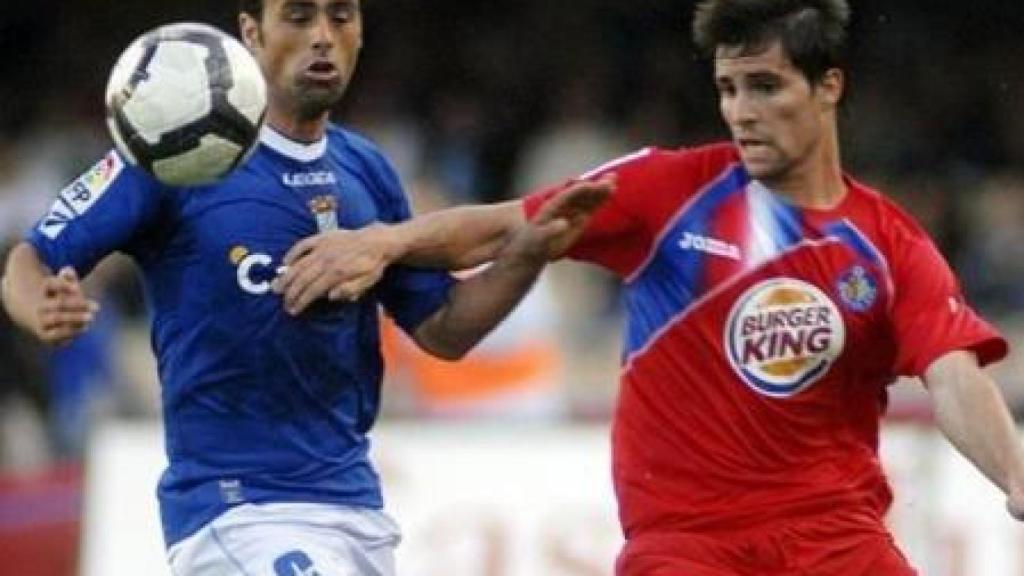
Adrián González, in a Getafe match towards Xerez.
In complete, the group has round 70 staff and an organizational construction that features departments and a administration board. Moreover, the person from Madrid stays linked to strategic selections: “I proceed to attend councils, we give our opinions and take part in lots of issues,” he says.
Nevertheless, he acknowledges that the success of the model has its personal title: that of his accomplice and pal Víctor Naranjo, CEO of the corporate. “I feel that if in the long run one thing has labored so effectively it’s because of how Víctor has managed every part from the start.”
The key, in line with the previous participant, lies in two pillars: product and other people. “Quite a bit has been invested within the human group. It was one thing by which at first I used to be extra reluctant, however it has been proven that it was a really appropriate determination. That has made the distinction.”
Thanks to this commitment, La Martinuca has not only consolidated a business model that combines direct sales in stores with home delivery, but has also achieved a turnover of close to 7 million euros per year.
For Adrián González, this achievement has a special value: “When I look back and see everything we have done in just four years, I realize that it really is a project to be proud of.”
But the former player does not stop at the hospitality industry. His other great project symbolically returns him to the playing field: La Ferroviaria, one of the oldest clubs in Madrid, founded in 1916.
“I bought it with a friend because it was the team where my grandfather played. He was sick of football and could never be a professional. It is a tribute to him.”
The club, historically linked to Renfe employees, was going through a delicate stage: without its own field, with hardly any resources and with a minimal structure.
“It was a team that belonged to the railways, it was in what would be Second or Second B today, but it was diluted. We wanted to recover it, give it identity and create something different.”
From footballer to businessman
Adrián González shows that football can be a business school. Effort management, teamwork and strategic vision of the field seem to have found a new playing field in it.
“In the end, when you are a footballer you learn to live with pressure, to make decisions and to trust your people. All of this is also useful for being an entrepreneur,” he reflects.
While his former teammates prepare to train or commentate on games, he is divided between La Martinuca meetings and La Ferroviaria projects.
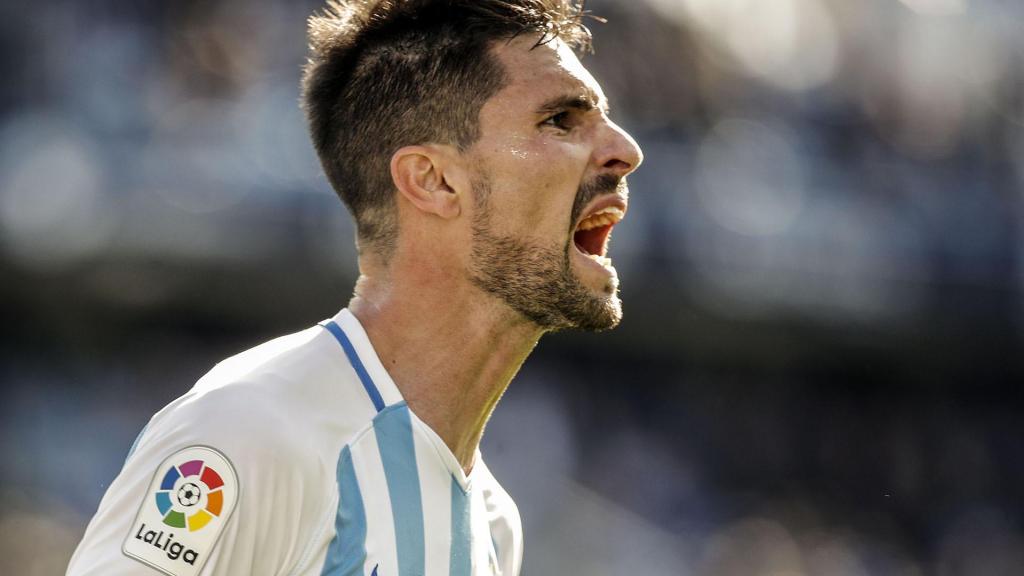
Adrián González, during a match with Málaga.
“There are days when I go from the company board to the club locker room. And I like it, because I’m still linked to football, but also building something that can have a future.”
The former player does not forget his past, but celebrates his present with realistic enthusiasm. “When I left football, I thought it would be more difficult for me to adapt, but I realized that the important thing is to have enthusiasm and surround yourself with good people,” concludes the Madrid native.


.jpg?w=120&resize=120,86&ssl=1 "Chelsea Players Salaries 2025 (Weekly Wages) – CFC Highest paid 2025/26")




/https%3A%2F%2Fsportsmole-media-prod.s3.gra.io.cloud.ovh.net%2Fuploads%2F2025%2F11%2Faaa-traff-sports-press-photo-aug-23-691ecb081e751973623219.jpg?w=120&resize=120,86&ssl=1 "Man City transfer news: James Trafford ‘increasingly likely’ to sign for one Premier League club")

