


 Arsenal




/https%3A%2F%2Fsportsmole-media-prod.s3.gra.io.cloud.ovh.net%2Fuploads%2F2025%2F11%2Faaa-traff-sports-press-photo-aug-23-691ecb081e751973623219.jpg?w=360&resize=360,180&ssl=1 "Man City transfer news: James Trafford ‘increasingly likely’ to sign for one Premier League club")


/https%3A%2F%2Fsportsmole-media-prod.s3.gra.io.cloud.ovh.net%2Fuploads%2F2025%2F11%2Faaa-sc-6915b0c1994b7049345326.jpg?w=360&resize=360,180&ssl=1 "Scotland vs. Japan team news: Steve Clarke names starting lineup for Hampden Park friendly")






On November 27, 2022, on the Al Bayt stadium in Jor (Qatar), two males met within the locker room tunnel after a match that neither had managed to win.
Spain and Germany had tied 1-1 on a day the place the expectations of each groups had been hit by the fact of a World Cup that was not turning out as they anticipated.
What neither of them knew then was that that hug between Luis Enrique and Hansi Flick would mark the top of an period for each and the start of a path that will cause them to direct two of probably the most enticing tasks in European soccer that collide this Wednesday in Montjuïc (9:00 p.m.).
“The primary time we met we talked rather a lot. It is good to speak to Luis, he is an amazing man,” Flick confessed after that assembly. The German didn’t skimp on his reward: “In Spain they’ve a philosophy that I actually like, they play very properly. Perhaps sooner or later he’ll say what I instructed him.”
These phrases, spoken with the strain of an elimination that loomed over each of them, had the flavour of a farewell that they didn’t but know would come.
Luis Enrique and Hansi Flick, talking after the Spain – Germany World Cup in Qatar
EFE
Behind the cameras, in the privacy of the tunnel, both technicians shared something more than protocols. Flick revealed that they had talked at length, but kept it a secret: “I’m not going to say what we’ve talked about. It’s private.”
That tie, which on paper kept both teams’ options alive, turned out to be the beginning of the end. Spain would be eliminated on penalties against Morocco in the round of 16, while Germany would not even make it past the group stage after losing to Japan on the last day.
The fall from the summit
On December 8, 2022, just two days after the Spanish elimination, the RFEF officially announced that Luis Enrique would not continue as coach. The statement was cold, almost bureaucratic: “The sports management has determined that a new project must be started.”
But behind those words hid the failure of a promising generation that had arrived in Qatar with the label of favorites, and that did not break out until two years later at the Euro Cup.
Luis Enrique said goodbye with a letter full of nostalgia: “It all started four years ago and how quickly time has passed.” In 48 games in charge of Spain, he had achieved 27 victories, 14 draws and 7 defeats.
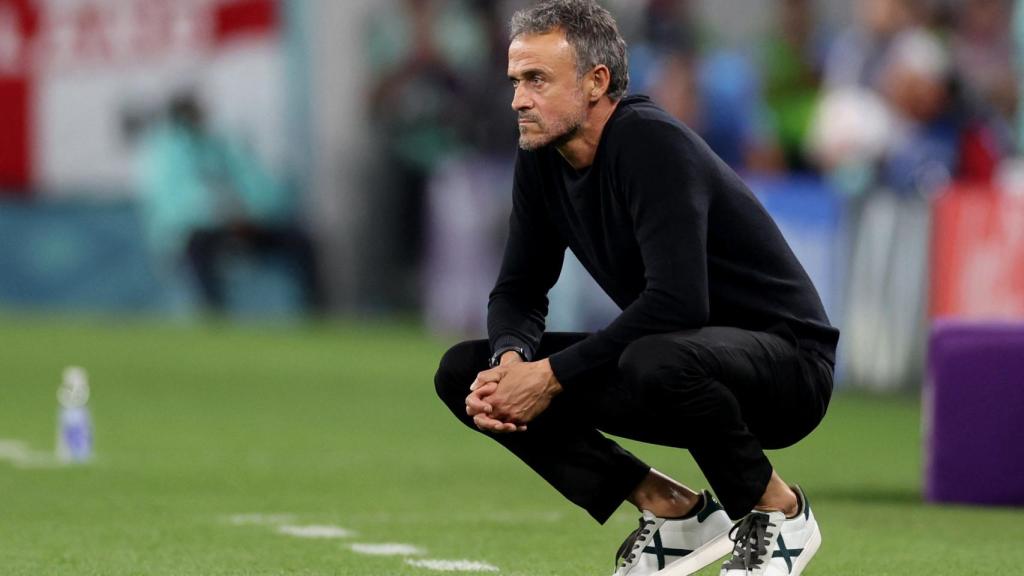
Luis Enrique, at the 2022 Qatar World Cup
He had led the team to two Final Fours of the Nations League and a semi-final of the European Championship, but Qatar had been his first disappointment.
The Asturian was left without a team at the worst moment. His name was heard for Atlético de Madrid, where Simeone seemed to hit rock bottom, but the Argentine managed to redirect the situation just when Luis Enrique was waiting.
If Luis Enrique’s departure was expected, Hansi Flick’s was humiliating. On September 10, 2023, after the 4-1 win over Japan in Wolfsburg, the German Federation made a historic decision: Flick became the first German coach to be fired since the position was created in 1926.
“The committees agreed that the men’s national team needs new impetus after recent disappointing results,” explained DFB president Bernd Neuendorf.
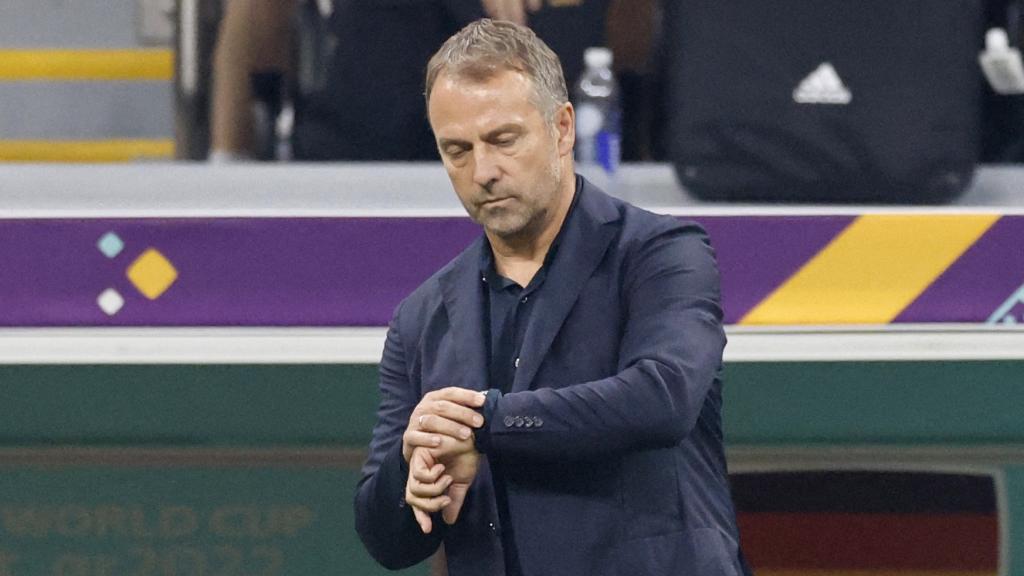
Hansi Flick, at the 2022 Qatar World Cup
Reuters
The statistics were devastating: five games in a row without winning and a feeling of a broken team that had been evident in the documentary about the World Cup in Qatar, where he was seen showing the players a video of geese in flight as a metaphor for collective work, becoming an object of ridicule.
Flick, who just 24 hours earlier had led a training session open to the public, was reluctant to accept the inevitable: “Yes, I’m still fighting. This continues, that’s how it is.” But the humiliation of defeat to Japan, with the team being booed by their own fans, had sealed their fate.
The rebirth
After six months in ostracism, Luis Enrique received the call that would change his career. On July 5, 2023, PSG officially announced his signing for two seasons. Nasser Al-Khelaïfi was direct: “His arrival will mark the beginning of a new cycle, with a new style of play.”
The connection with Luis Campos, the Portuguese sports director, was essential. Both shared a vision of football that transcended individual stars. “In Paris, Luis Enrique is undoubtedly the first coach who enjoys true freedom of action and expression,” Le Parisien would later analyze.
The project could not be more challenging: conquer the Champions League that had resisted PSG throughout the Qatari era. With Mbappé as the latest superstar of the galactic project, Luis Enrique had the mission of creating a team that was more than the sum of its parts.
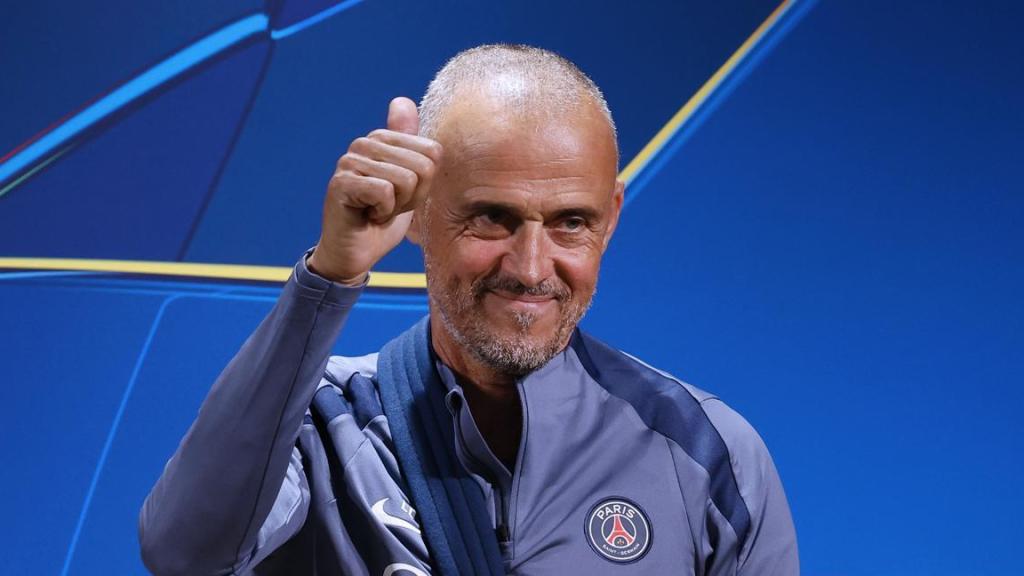
Luis Enrique, at a press conference with PSG
EFE
While Luis Enrique was rebuilding his career in Paris, Flick was experiencing his own months of uncertainty. His admiration for Barcelona was no secret: he had grown up watching total football in the 70s and had publicly confessed his fascination with the culé philosophy.
On May 29, 2024, when Barcelona officially announced his signing, Flick could not hide his excitement: “Culers, it’s our moment. Força Barça!”
Joan Laporta saw one of his aspirations fulfilled: since returning to the presidency in 2021, he had always expressed himself in favor of betting on the German route: Nagelsmann, Tuchel, Klopp, Flick… and he had achieved it.
Deco, the architect of the signing, defined him precisely: “A calm man, a football person. He likes to work, he is a worker, a coach who has clear ideas, very demanding.” The harmony between the two was immediate: Flick knew what he was getting into and did not ask for signings that were economically unviable.
The circle closes
Three years after that hug in Al Khor, both coaches have become the leaders of two of the most attractive projects in European football. Luis Enrique has led PSG to their second Champions League final after winning the domestic treble in his first season.
His renewal until 2027 reflects the blind trust of a board that has found in him the architect of the post-Mbappé.
Flick, for his part, has restored hope to a Barcelona fandom that had lost faith. His Barcelona plays the most attractive football in Europe, with a high line that causes offsides as if they were goals and a youth team that is once again the protagonist.
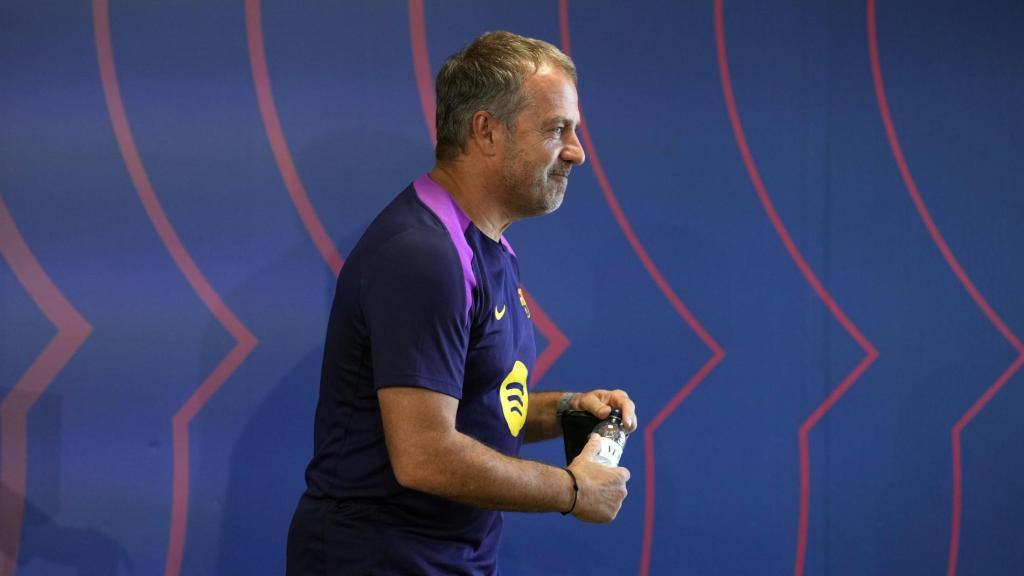
Hansi Flick, in the FC Barcelona press room
EFE
This Wednesday, when they meet at the Lluís Companys Olympic Stadium, there will not only be a tactical duel between two similar philosophies.
There will be two men who shared the pain of the defeat in Qatar, who experienced the humiliation of dismissal and who have known how to reinvent themselves until they managed the two teams that best represent the ambition and beauty of contemporary European football.
That hug in November 2022 is no longer the end of a story, but the prologue of a new one. Two ‘castaways’ from Qatar who became the captains of the most impressive ships on the continent.


/https%3A%2F%2Fsportsmole-media-prod.s3.gra.io.cloud.ovh.net%2Fuploads%2F2025%2F11%2Faaa-sc-6915b0c1994b7049345326.jpg?w=350&resize=350,250&ssl=1 "Scotland vs. Japan team news: Steve Clarke names starting lineup for Hampden Park friendly")


.jpg?w=120&resize=120,86&ssl=1 "Chelsea Players Salaries 2025 (Weekly Wages) – CFC Highest paid 2025/26")


